
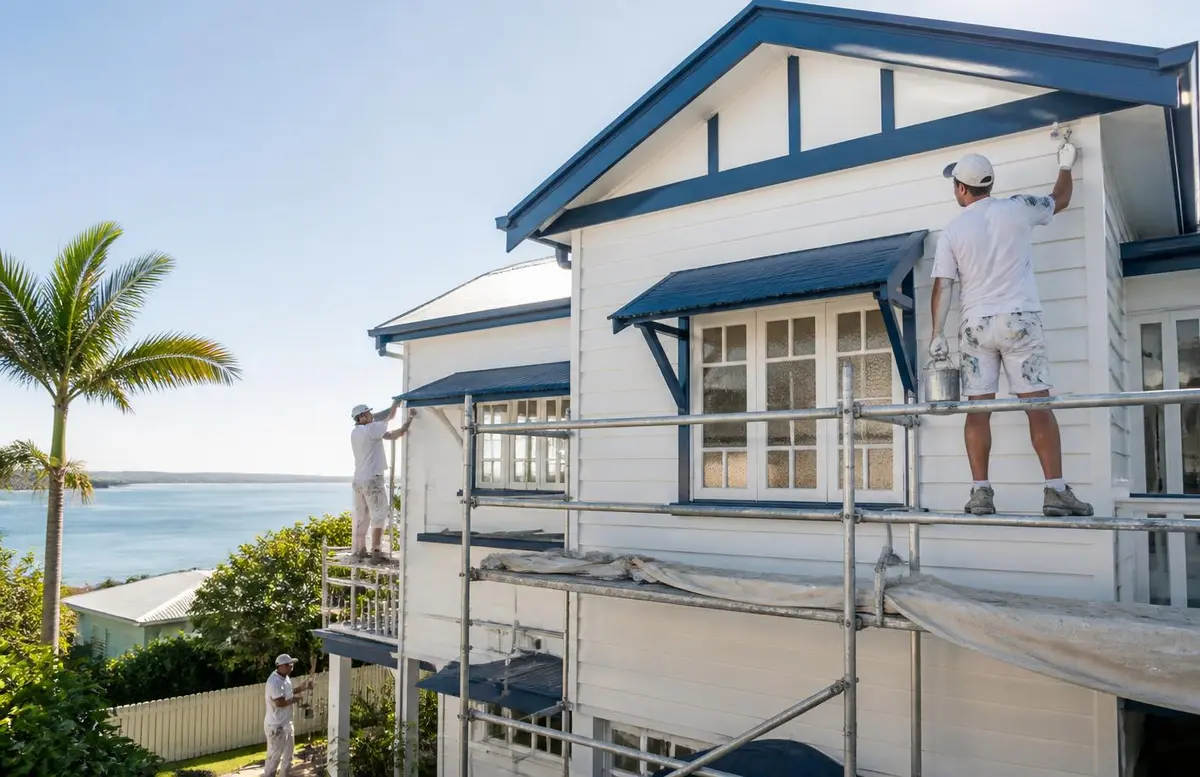
Interior and exterior painting use different preparation methods and coating systems. This guide compares surface needs, product suitability, access and planning.
Interior and exterior painting serve different purposes
Interior painting focuses on the appearance and practical use of rooms, including walls, ceilings, doors and trim. Exterior painting must also account for the surface material and exposure to sun, rain, wind and changing temperatures.
Surface preparation
Interior surfaces
Interior walls and ceilings may need cleaning, filling, sanding, patching and spot priming. Doors and trim often need a different preparation and finish from broad wall areas.
Exterior surfaces
Exterior surfaces may require more extensive cleaning, scraping, sanding, repairs and primers suited to timber, render, masonry or metal. Weather and drying conditions should be considered before applying coatings.
Choosing a suitable coating
The coating should match the substrate, existing finish and intended use. Follow the manufacturer’s instructions for surface preparation, application conditions, coverage and recoating intervals.
Planning the project
- Identify all surfaces to be painted
- Discuss preparation and any repairs
- Choose colours and finishes for each area
- Confirm access, protection and timing
- Allow for drying and recoating intervals
A site assessment helps establish whether interior, exterior or combined painting work is suitable for your property.
Frequently asked questions
Questions about your own property?
Call Now — +61 483 709 394For a local assessment, explore our interior house painting service or ask about work in Maitland.
Request an on-site painting assessment